
Elise Nisonoff
Microbiology Final E-Portfolio
Creative Piece: Homemade Kombucha
Inspiration/ Information:
Throughout the semester, we discovered what fermented foods and drinks are and how they are made. We indulge in fermented foods and drinks very often without even realizing what they are and how long it takes for them to be made! Kombucha is one of my favorite drinks, and after learning that it is fermented, I was so curious to know the exact process of how it is made.
Kombucha is a fermented drink so it goes through a similar process that yogurt, wine, beer, and cheese all go through before they are sold and are edible. Fermentation is a process that is anaerobic, and it breaks down sugar into simple compounds. The yeast fermentation in Kombucha occurs when the sugar converts to alcohol, followed by the alcohol converting to acetic acid. A biofilm then covers the top of the liquid after a few weeks of the fermenting liquid which is called the "Scoby".
Connection:
In the first step of the fermentation process, a biofilm is produced on top of the liquid after a few weeks. Then, after approximately 6-10 days after the biofilm is produced, the sugar and tea in the liquid convert to a sour, carbonated liquid, which we know as Kombucha. Acetic acid, gluconic acid, and ethanol are the main controlling factors in the fermentation of the sugar and tea liquid prior to the "Scoby" or biofilm forming. In the fermentation process, bacteria and yeasts create a symbiosis that causes the pH in the original mixture to drop, which then inhibits the growth of pathogenic microorganisms. Factors that can inhibit the process of the fermentation of kombucha are pH, temperature, O2 at the start of the process, dissolved C02, and the concentration of the fermentation substrate. The product must be held at ~68 degrees Fahrenheit, or room temperature, in order for the fermentation to begin. At this temperature, the product must be kept covered from ~7-60 days straight, however, most kombucha is reported to be ready to enjoy in ~15 days.
Zygosaccharomyces is reported to be one of the most common predominant yeasts found in Kombucha. The dominant bacteria found in this fermented drink are aerobic bacteria that have the power to convert the alcohol to acetic acid.
I chose to make my own homemade kombucha to creatively exemplify the process of fermentation and microbial growth, as well as to show what I learned from this topic throughout this semester.
Kombucha-Making Process
(Creative Piece Continued)
Part 1:
Part 2:
Physical changes of the kombucha that I noticed during the fermentation process:
- Change in color--> from darker red to lighter red
- Fizzy taste/feeling of carbonation
- My kombucha still needs to undergo a second round of fermentation so it was not 100% ready, but it tasted pretty good! I was pleasantly surprised and am excited for it to be ready to drink fully and for all of my roommates to try it!
MindMap
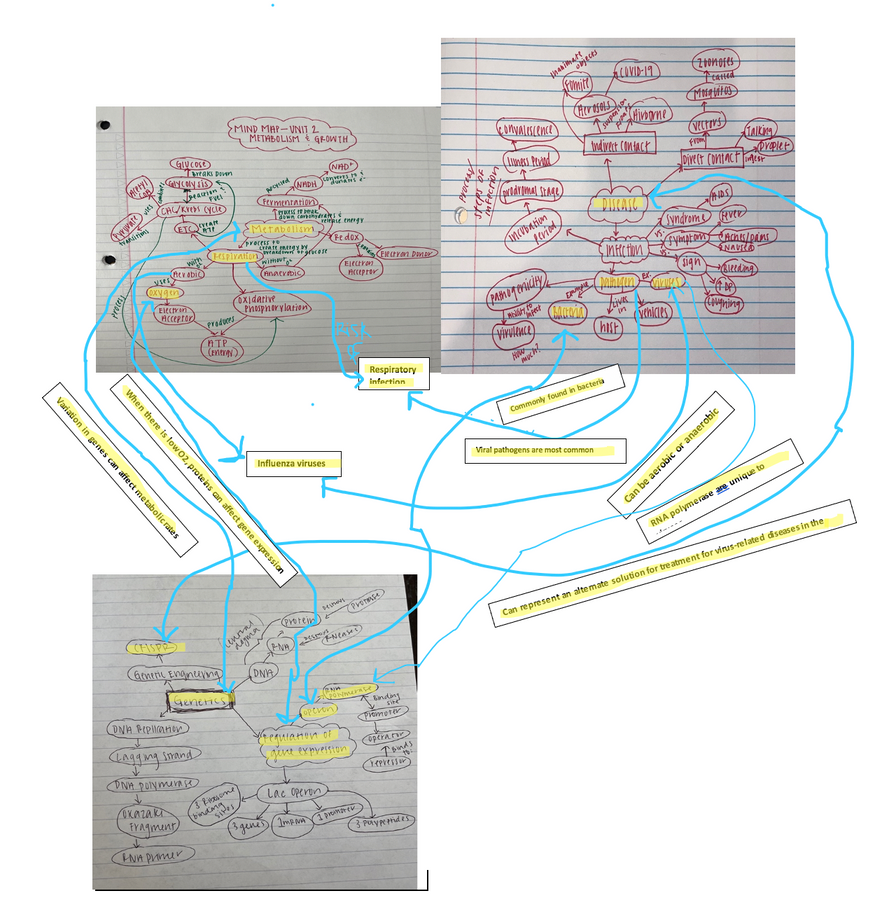
I used all three mind map topics Metabolism, Genetics, and Disease to connect and relate each topic. The first thing that stood out to me was how DNA and infections are related through viral infections. Viruses are made up of DNA that is replicated by a DNA polymerase. Another thing that stood out to me immediately was the connection between CRISPR and disease. CRISPR is a technology source that is used to edit DNA, and as we learned in class, it has the potential to change the world. CRISPR relates to disease as it is potentially able to diagnose and treat diseases and illnesses. CRISPR technology represents an alternative solution to treat viral infections and diseases in the future.
Another connection that stood out to me was the relation between respiratory diseases/ infections and pathogens. Viral pathogens are known and proven to be the most common factor and cause of respiratory infections. Viral pathogens such as influenza, measles, mumps, etc. are pathogens that we are easily exposed to, especially when we travel. This is why vaccinations are so important for us. I also made the connection between aerobic and viruses as viruses have the ability and transparency to be aerobic or anaerobic. One aerobic virus that I exemplified and connected in the mindmap was the Influenza virus. Also, RNA polymerase connects to viruses as the host cell that the pathogen inhibits does not particularly require RNA replication or reverse transcription which allows the two terms to be connected to one another.
Finally, my last few connections were between operons and bacteria, as operons are typically found in bacterial cells. The topics of Metabolism and Genetics easily show this connection. A direct connection was made between genetics and metabolism through the fact that variations in genes can affect metabolic rates and systems. I also connected proteins and gene expression as we learned that in low O2 conditions, HIF proteins can change the gene expression in DNA.
Favorite Topic
The topic that interested me the most: Microbial Genetics
The most significant topic to me throughout the semester was Microbial Genetics. Learning about the structure and function of genetic material and all the processes and functions involved in DNA Replication was something that I had a strong prior interest in learning about before taking this course. Being able to understand the material and the information behind each genetic process was something I truly enjoyed. Microbial Genetics is a very important topic to understand when it comes to bacteria and viruses and how they form, and why they replicate and spread so quickly.
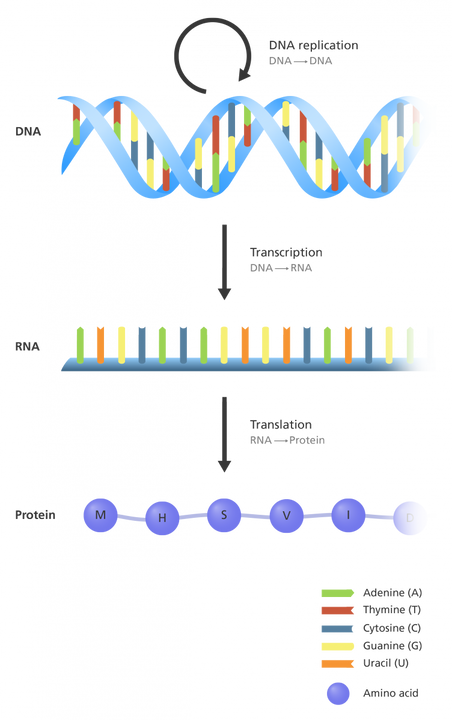
It is important to understand the genetic flow of information within a cell. The Polymerase Chain Reaction (PCR) is used to make multiple copies of DNA as well as to diagnose genetic diseases and detect pathogens that invade the cell. In bacterial illnesses and viruses, it is important to use microbial genetics to be able to see what illnesses are genetic and what is caused by a pathogen invasion. Mutations also occur due to random changes in genetic material. Gene mutations are very rare but they do still occur and cut off the normal replication processes for proteins. These processes occur continuously and seem to always be advancing. Having such knowledge of genetics and diseases, allows medical professionals to create new ways to treat, diagnose, and prescribe medications to patients suffering from viral or bacterial infections, which is something I hope to have a career in one day!